
Deferred Revenue
Deferred revenue is money a customer has already paid for goods or services the business still owes them.
The cash may already be in the bank, but the revenue is recognized over time as the business delivers what the customer paid for.
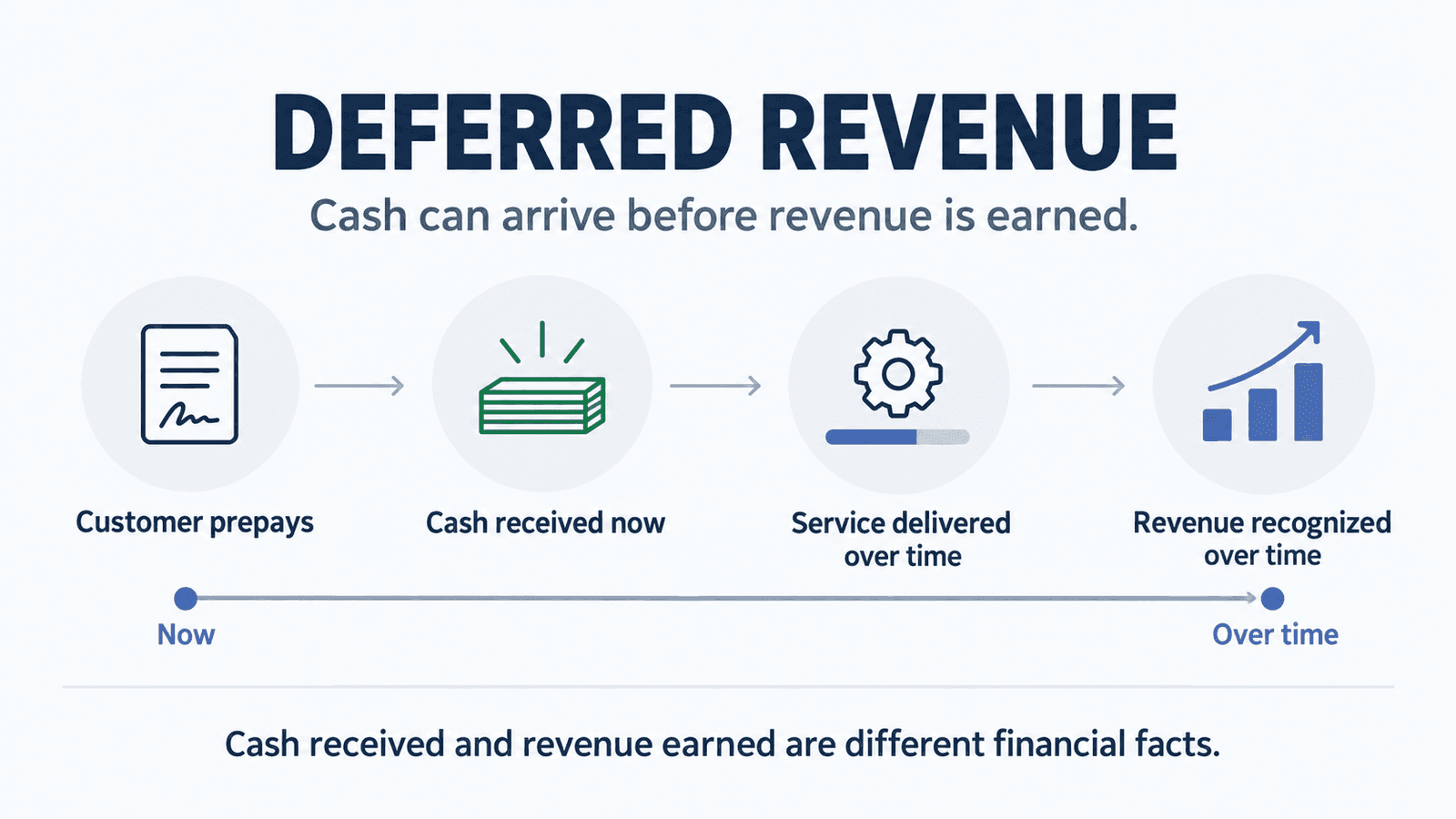
Cash can arrive before the related revenue is earned.
What is Deferred Revenue?
Deferred revenue, also called unearned revenue, happens when a customer pays before the business has fully delivered the product or service.
Examples include an annual subscription paid upfront, a prepaid service contract or a retainer for work that will be delivered later.
The business has the cash, but it also has an obligation to the customer. Under accrual accounting, that obligation is generally recorded as a liability until the revenue is earned.
Cash received is not always revenue earned
If a customer prepays for a year, the bank balance can increase immediately.
That does not mean the full payment became revenue on the same day. Revenue is generally recognized as the promised goods or services are delivered.
This is why cash and revenue can tell different stories about the same customer payment.
Why it matters
A healthy bank balance can look more comfortable when some of that cash relates to work the business still has to deliver.
Keeping deferred revenue visible helps explain why the cash balance and recognized revenue may not move together.
It also gives the person reviewing the business more context before treating every dollar in the bank as economically equivalent.
Example
A customer pays $12,000 upfront for a 12-month service.
The business receives the cash at the start. Under a simple straight-line example, the revenue would generally be recognized over the service period rather than all at once.
The exact accounting treatment depends on the arrangement and applicable accounting rules.
How RunwayCal helps
RunwayCal keeps recorded deferred-revenue context visible alongside the cash position when supported data is present.
That helps the reviewer distinguish cash already received from revenue that has not yet been earned, without treating the two as the same financial fact. Deferred revenue is not universally deducted from True Cash Position.
Common mistakes
- 1Treating cash received as revenue earned immediately.
- 2Assuming deferred revenue means the cash is unavailable.
- 3Using bank balance alone to understand performance.
Get the Financial Clarity Newsletter
Practical tips on cash flow, runway, and financial decisions for founders, business owners, CFOs, investors, and board members. Free, weekly, no spam.
Related terms
Keep cash and revenue timing in context.
See the financial information behind the cash position before making the next decision.
Explore Mission Control