
For finance teams
Turn what happened into a plan the business can rely on.
Actuals move. Assumptions change. Budgets drift. Leadership still needs an answer. RunwayCal connects what happened with what was planned, what changed, and what happens next.
01 / The planning cycle
Finance does not stop at month-end.
A useful planning process keeps the evidence, assumptions, and decision connected. Each pass should make the number and the reasoning behind it easier to explain.
Actuals
Start with what happened: cash, revenue, payroll, commitments, and expenses.
Assumptions
Show the timing and operating expectations behind the plan.
Plan
Build the working view the business will measure decisions against.
Variance
See where reality moved from plan and what needs attention.
Scenario
Change a key assumption and compare the financial consequence.
Report
Carry that logic into a clear explanation for the people making the decision.
02 / Actuals
Start with what actually happened.
Before explaining variance or updating a plan, the team needs a shared view of what moved across cash, revenue, payroll, commitments, and operating expenses.
RunwayCal is a connected financial planning operating system for growing businesses. It brings those inputs together so finance and the people making the next decision start from the same picture.
Explore the Financial MapReview collection timingWorking assumptions
03 / Assumptions
Make the thinking behind the number visible.
A plan is only as useful as its assumptions. When timing, hiring, spend, or revenue expectations move, finance needs to see what changed and why.
Explicit assumptions give the review somewhere concrete to begin. They also separate a changed business expectation from a formula error or unexplained output.
04 / Plan and variance
See the variance. Then decide whether the plan needs to move.
Planner compares the working plan with what is now known. Variance shows where an assumption or decision may need review.
Explore Planner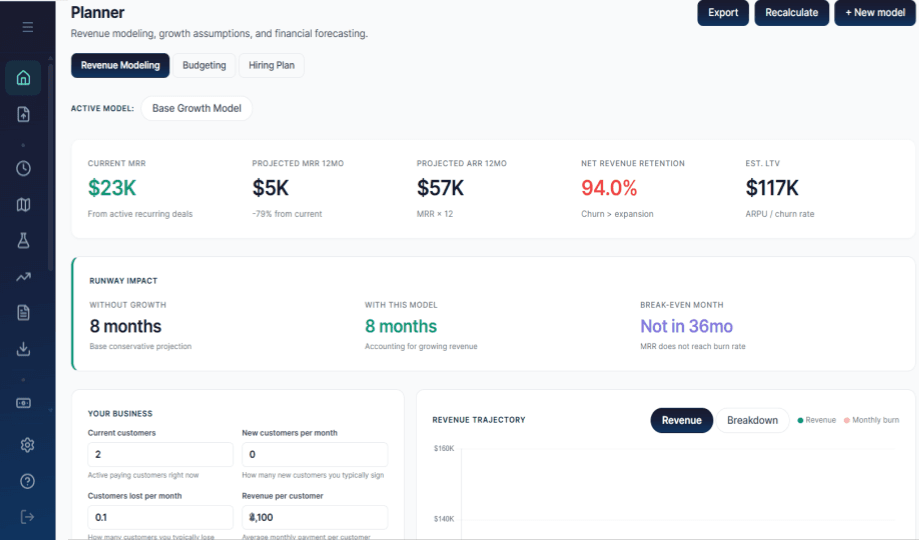
05 / Scenario
What changes if the assumption changes?
Variance shows the distance from plan. A scenario lets the team test a response before it becomes the new plan.
Change a meaningful assumption, compare the financial picture, and keep the hypothetical case separate from what already happened. Leadership gets a clearer tradeoff to discuss.
Explore Scenarios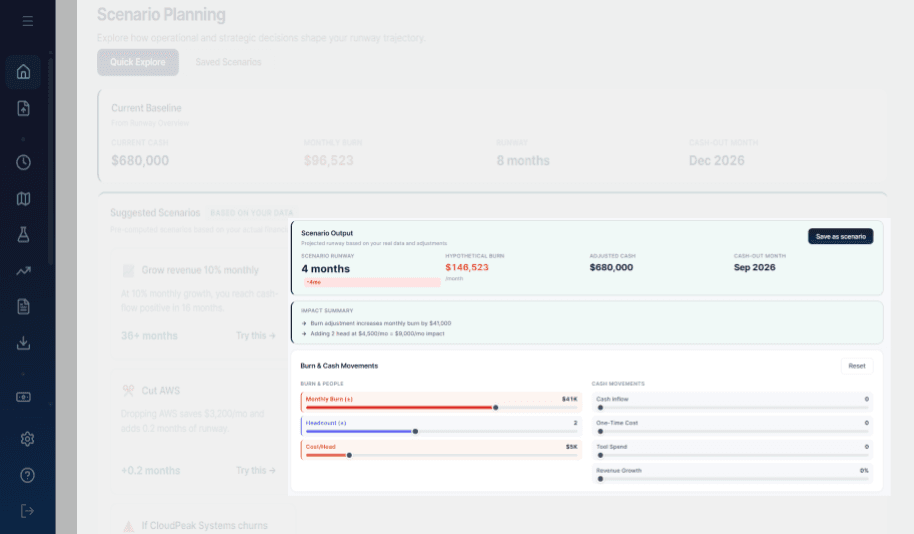
06 / Connected picture
Connect the plan to the whole business.
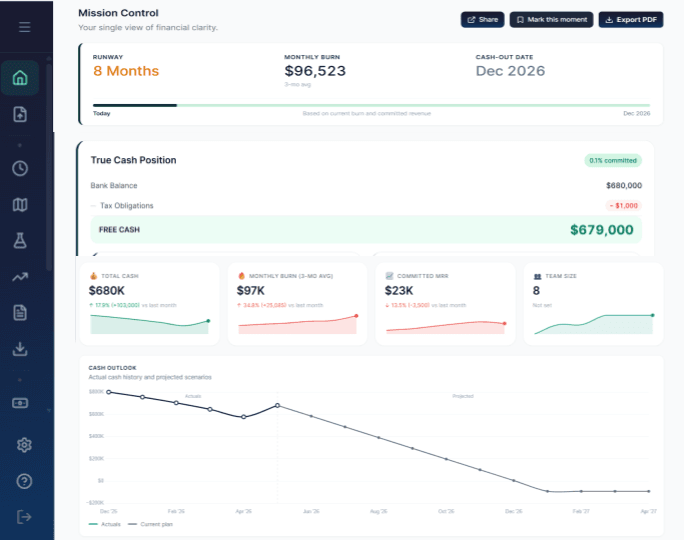
RunwayCal connects your commitments, cash, revenue, teams, budgets, and scenarios into one financial picture, so you can see what's happening, what's coming, and how your business changes when you make your next move.
07 / Reporting
Carry the logic forward, not just the final number.
A useful finance update explains which inputs shaped the plan, which assumption moved, what the result means, and what decision follows. Leadership should see the movement and the reasoning behind the number.
Keep that context connected between meetings so the team can return to the review and separate an observed result from a hypothetical scenario. That context lets leadership challenge the plan without rebuilding the story.
Make the path from evidence to action easy to follow.
What entered the review?
What expectation changed?
What changed in the picture?
What decision follows?
A planning system finance can stand behind
Connect the number, the assumption, and the next decision.
Build a clearer planning cycle around the financial reality your team already explains.